

Business Line enabling UAE e-Invoicing compliance for businesses
Dubai, UAE: As the United Arab Emirates advances its digital tax transformation agenda, organizations across the country are preparing for the introduction

Saudi Arabia’s mandatory e-invoicing program has entered its most commercially impactful stage. Under Phase 2 (Integration Phase), businesses are now required to connect their ERP and billing systems directly to the FATOORA platform operated by Zakat, Tax and Customs Authority (ZATCA).
For finance leaders, this is no longer a regulatory checkbox. Phase 2 introduces real-time invoice clearance, XML-based reporting, cryptographic stamping, and audit-ready data retention — all of which directly affect cash flow, VAT deductibility, and operational continuity.
This guide is written specifically for SAP customers in Saudi Arabia — including SAP S/4HANA and SAP Business One environments — who need a clear, practical understanding of ZATCA Phase 2 requirements, current enforcement waves, and what technical readiness actually looks like before the 2026 deadlines, supported by an expereienced SAP consulting firm in saudi Arabia.
This applies to SAP S/4HANA (utilizing SAP DRC), SAP ECC, and SAP Business One. The strategy differs by environment: while S/4HANA leverages the Standard Document and Reporting Compliance (DRC) framework, ECC and B1 often require specialized connectors or middleware to handle the real-time “handshake” with the Fatoora portal.
Saudi Arabia continues the phased rollout of mandatory e-invoicing under the Integration Phase, requiring businesses to connect their systems directly with the FATOORA platform operated by the Zakat, Tax and Customs Authority (ZATCA).
In July 2025, ZATCA confirmed Wave 23, targeting taxpayers with annual VAT-subject revenues exceeding SAR 750,000 during 2022, 2023, or 2024. Affected businesses must complete Phase 2 integration no later than 31 March 2026.
In October 2025, ZATCA announced Wave 24, extending Phase 2 requirements to taxpayers with revenues above SAR 375,000 during the same assessment period. The compliance window for Wave 24 runs from 1 April 2026, with a final enforcement deadline of 30 June 2026, as confirmed by ZATCA’s official implementation decision.
ZATCA formally notifies each affected taxpayer ahead of their enforcement window. Businesses are expected to complete technical integration, testing, and go-live within the notified period to avoid compliance breaches. For official requirements, formats, and integration rules, refer to the ZATCA E-Invoicing Detailed Guideline,
ZATCA Phase 2 goes beyond generating electronic invoices. It introduces a continuous transaction control (CTC) model, where invoices must be validated, stamped, and either cleared or reported through the FATOORA platform using standardized technical protocols.
At a high level, Phase 2 requires SAP environments to:
Under ZATCA Phase 2, not all invoices follow the same compliance flow. The Integration Phase introduces two distinct models depending on the transaction type: Clearance (B2B) and Near Real-Time Reporting (B2C).
Understanding this distinction is critical, because SAP must be configured differently for each flow, and errors here are one of the most common causes of failed Phase 2 audits.
Standard Tax Invoices (B2B) — The Clearance Model For Business-to-Business (B2B) and Business-to-Government (B2G) transactions, the “Clearance” model applies. In this flow, the invoice is legally invalid until ZATCA returns a cleared XML with a cryptographic stamp.
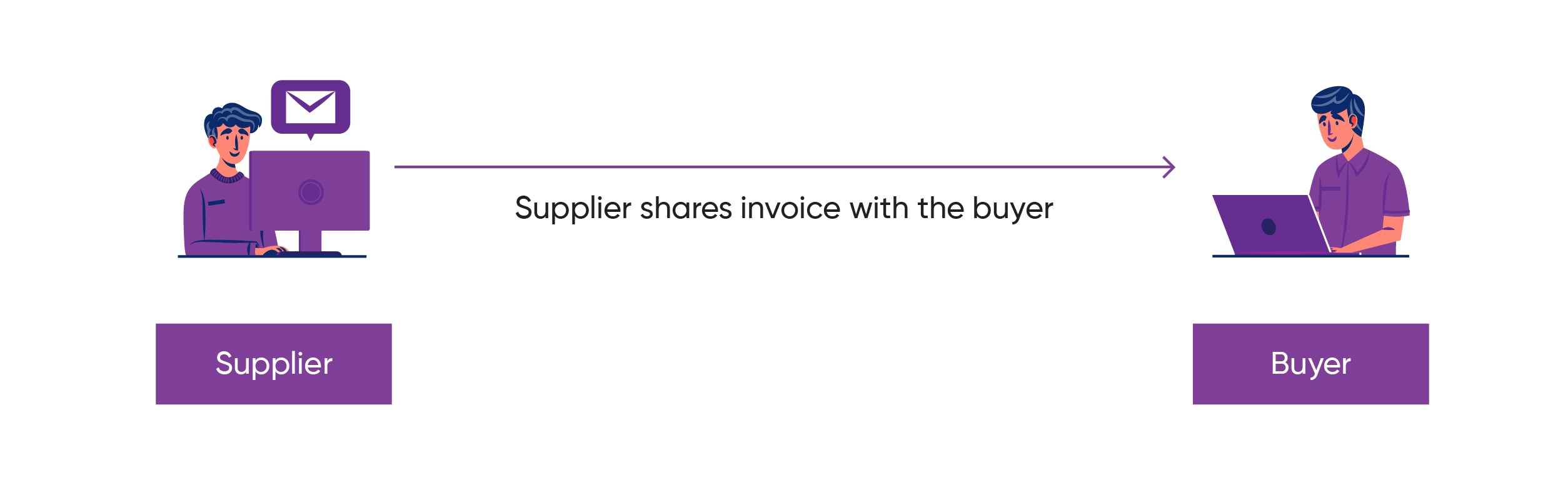
Simplified Tax Invoices (B2C) — The Reporting Model For Business-to-Consumer (B2C) transactions, the “Reporting” model allows for immediate issuance. However, the SAP system must be configured to batch or transmit these to ZATCA within 24 hours of the timestamp.
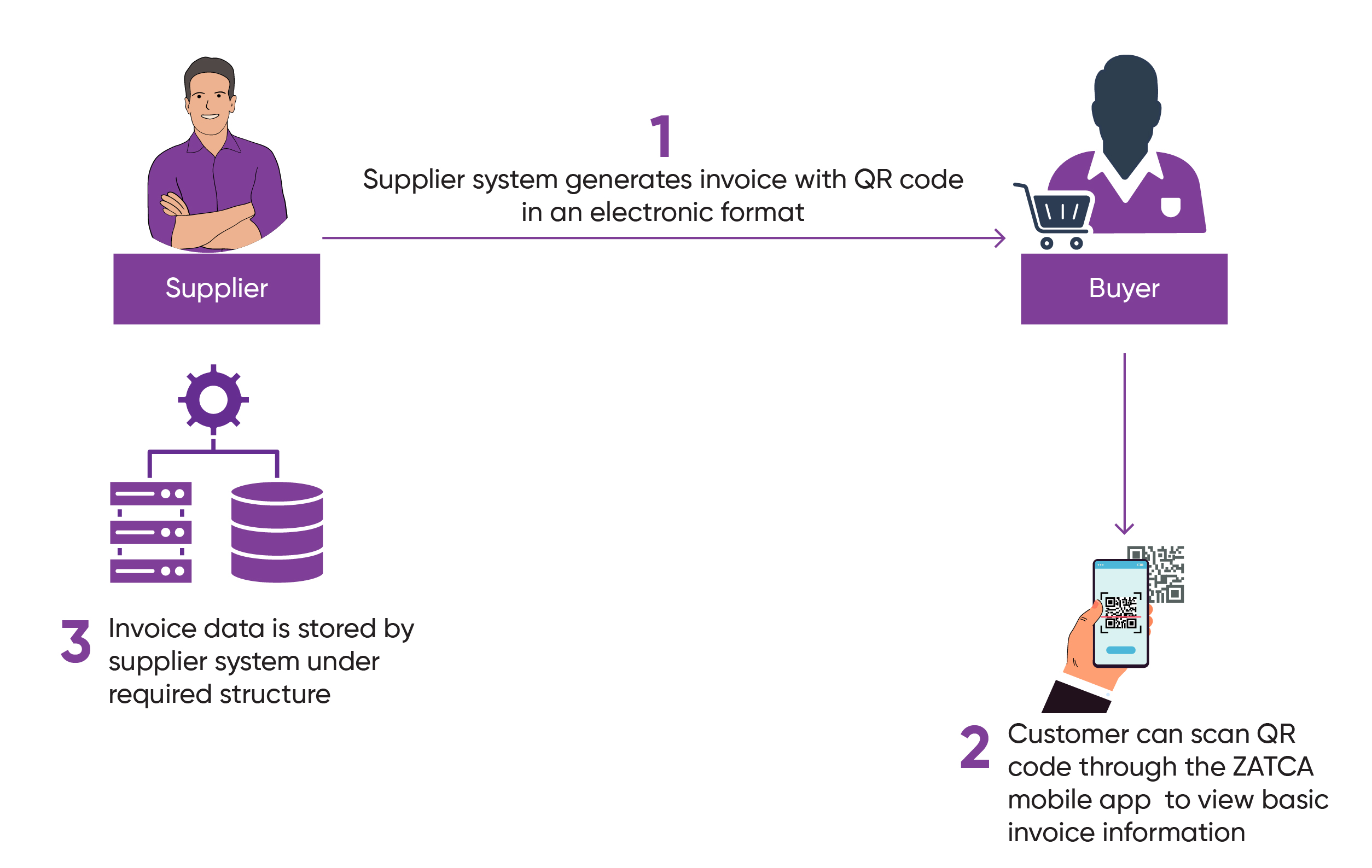
How it works:
Critical implication for SAP users:
High-volume retail environments must ensure system performance and queue stability, or reporting backlogs can create compliance exposure.
Many SAP projects fail ZATCA Phase 2 not because the ERP is wrong — but because:
In SAP environments, this directly affects:
This is why ZATCA compliance cannot be handled as a “billing add-on” — it must be architected into the SAP transaction lifecycle.

ZATCA Phase 2 compliance is not solution-agnostic.
While both SAP S/4HANA and SAP Business One (B1) can support e-invoicing integration, their readiness models, risks, and scalability profiles differ significantly.
Choosing the wrong SAP platform — or underestimating its limitations — is a leading cause of integration delays, failed testing cycles, and post–go-live penalties in Saudi Arabia. If you need local delivery ownership, work with an SAP partner in Saudi Arabia that can design B2B clearance vs B2C reporting correctly in your SAP landscape.
SAP S/4HANA is designed to support high-volume, real-time clearance and reporting scenarios across complex organizational structures.
Strengths for ZATCA Phase 2:
Best suited for:
Primary risk (if mismanaged):
Over-engineering the solution without aligning it to Saudi compliance workflows, resulting in unnecessary cost and complexity.
SAP Business One can support ZATCA Phase 2 compliance, but with tighter architectural boundaries.
Strengths for ZATCA Phase 2:
Limitations that must be managed carefully:
Best suited for:
Primary risk (if ignored):
Treating Business One like an enterprise platform and pushing it beyond its intended compliance envelope.
ZATCA Phase 2 failures are rarely caused by SAP itself.
They occur when businesses assume:
In reality, ZATCA compliance is an architectural decision, not just a functional one.
The correct question is not:
“Can this SAP system integrate with ZATCA?”
But:
“Is this SAP system aligned with our Saudi transaction volumes, audit exposure, and growth horizon?”
ZATCA Phase 2 is not a reporting upgrade.
It is a real-time system integration mandate that fundamentally changes how invoices are created, validated, cleared, and stored inside SAP.
At a technical level, Phase 2 requires SAP systems to connect directly with the national FATOORA platform operated by Zakat, Tax and Customs Authority, exchanging structured invoice data through secure APIs before (or immediately after) invoice issuance.
At a minimum, every compliant SAP architecture in Saudi Arabia must support five mandatory technical layers:
| Layer | Purpose | Why ZATCA Cares |
| Invoice Generation | Create structured XML invoices | Ensures standardized data |
| Cryptographic Signing | Hashing & digital signatures | Prevents invoice tampering |
| API Connectivity | Secure system-to-system exchange | Enables real-time validation |
| Clearance / Reporting | ZATCA approval or notification | Legal enforceability |
| Audit & Archiving | Long-term invoice traceability | VAT audits & penalties |
If any one layer fails, the invoice becomes non-compliant, regardless of SAP version.
ZATCA Phase 2 enforces two different technical workflows, depending on transaction type.
For B2B invoices:
Key risk:
If clearance fails, the invoice is legally invalid.
For B2C invoices:
Key risk:
Late or missing reporting triggers penalties and audit flags.
A compliant SAP ZATCA flow typically follows this sequence:
This flow must operate without manual intervention to pass compliance audits.
Based on real Phase 2 audits, the most common failures include:
These failures almost always stem from implementation shortcuts, not SAP limitations.
Many businesses assume:
“Installing a ZATCA add-on = compliance”
This is incorrect.
Add-ons may handle:
But they do not replace:
ZATCA evaluates the entire system behavior, not just the connector.
ZATCA Phase 2 architecture must align with:
This is why architecture decisions made today directly impact compliance risk in 2026 and beyond.
ZATCA Phase 2 compliance is not achieved at integration — it is achieved at successful testing, certification, and controlled go-live.
Many Saudi businesses fail after building the integration because they underestimate ZATCA’s validation rigor, timeline discipline, and audit expectations enforced by Zakat, Tax and Customs Authority.
This section defines the exact readiness framework SAP systems must pass before invoices can legally flow in production.
Before engaging ZATCA’s test environment, SAP must demonstrate internal technical readiness.
| Area | Validation Requirement |
| Invoice Scenarios | All B2B & B2C cases covered |
| XML Schema | 100% compliant with ZATCA format |
| Cryptography | Hash, UUID, and digital signature verified |
| Error Handling | Automatic rejection capture & retry |
| Invoice Locking | No posting before clearance (B2B) |
| Audit Logging | Immutable storage of XML & responses |
If these fail internally, ZATCA testing will fail repeatedly, delaying go-live.
ZATCA requires all businesses to validate integration using official sandbox endpoints before production approval.
SAP must correctly interpret and handle every response type, not just approvals.
Hidden Risk:
Ignoring warning responses leads to audit exposure later.
After sandbox approval, businesses must prepare for production certification.
ZATCA does not allow phased go-live by department. Once live, all invoices must comply.
ZATCA Phase 2 is not “set and forget.”
Post go-live controls must include:
Most penalties occur after go-live — not during onboarding.
| Failure | Impact |
| Clearance delays | Cash flow disruption |
| XML version mismatch | Invoice rejection |
| Missing archive | VAT audit penalties |
| Certificate expiry | System-wide invoice halt |
| Poor monitoring | Undetected non-compliance |
These failures are operational, not technical — and fully preventable.
Before approving go-live, leadership should answer YES to all:
If not — go-live is a liability, not a milestone.
This is why Saudi organizations increasingly rely on a SAP partner in Saudi Arabia with proven Phase 2 delivery experience and local compliance ownership — if you want Business Line to assess your SAP landscape for Wave 23/24 readiness,
Whether you're exploring or already know what you need, we're here to help.
Get exclusive insights, curated resources and expert guidance.

Dubai, UAE: As the United Arab Emirates advances its digital tax transformation agenda, organizations across the country are preparing for the introduction

KARACHI – Business Line, a leading SAP partner with a strong presence in the Middle East, has officially been awarded SAP Partner

ZATCA Phase 2 compliance presents a materially different challenge for businesses running SAP Business One compared to larger SAP S/4HANA environments. While

As of 2026, the Saudi Personal Data Protection Law (PDPL) has fully transitioned from its grace period into Full Enforcement. For SAP